
When starting a new business, many entrepreneurs ask the simple question: what do people actually want?
It’s a valid question, and conventional thinking advises that budding entrepreneurs should conduct market research, community votes or take into consideration the ‘wisdom of the crowd’ to initiate their venture.
So, should entrepreneurs listen to the crowd, or should they ignore the noise?
In this article, we work out the best strategy to answer this vitally important question.
Here goes…
The Concept of the Wisdom of Crowds – Is it True?

The concept of ‘wisdom of the crowd‘ is that a group of people can make better decisions than any one individual.
When we translate that to entrepreneurship, it may indicate that a group of potential customers should make better decisions than any single business founder, for example.
Therefore, it follows that entrepreneurs may find it useful to take guidance from the community or potential customers before starting their business, and during the growth of their venture.
Listening to your potential audience makes logical sense; it should lead to better outcomes and more desirable products and services.
So yes, the wisdom of the crowd is real and true, but there are some important caveats.
Where Crowd Wisdom Breaks Down

The problem for entrepreneurs who lean in too heavily on crowd wisdom is that if the concept is new, or one that has not yet gained traction in the marketplace, the crowd is more likely to reject it.
In addition, customers are not very good at identifying solutions that do not yet exist.
The other issue is that unless the crowd is particularly diverse and contains a wide variety of skills and experiences, entrepreneurs may come across the issue of ‘groupthink’.
Groupthink is where the crowd converges on a particular outcome or belief.
It occurs because, as humans, we have an innate desire to fit in, so in a public setting we may hold back our genuine opinion to appear more appealing to the crowd.
In the modern era, groupthink is of particular concern, because most entrepreneurs take their cues from social media.
Social media often encourages likes and views, and the emphasis on these metrics may create an environment where groupthink is more likely to take hold.
Steve Jobs’ Problem With Asking The Market

Steve Jobs, founder of Apple, famously said:
“Some people say, “Give the customers what they want.” But that’s not my approach. Our job is to figure out what they’re going to want before they do. I think Henry Ford once said, “If I’d asked customers what they wanted, they would have told me, ‘A faster horse!'” People don’t know what they want until you show it to them. That’s why I never rely on market research. Our task is to read things that are not yet on the page.” – Steve Jobs.
Jobs expressed the view that consumers do not always know what they want until a product comes along that blows their mind as to what’s feasible.
This controversial viewpoint rejects market research and relies heavily on the prediction capabilities of company founders to anticipate what customers are likely to desire in the future.
Entrepreneurs should be careful to understand the difference between merely improving an existing product and creating an entirely new category of product.
If your venture is leaning towards creating an unestablished product, it may be unwise to rely solely on the wisdom of the crowd, according to Steve Jobs’ viewpoint anyway.
For example, if you query your customers on whether they would prefer a cheaper subscription, a more advanced user interface or faster services. You are likely to get useful and meaningful responses.
But asking the average consumer about a product based on new technology or a particular business model they may not have encountered yet may be more challenging and less fruitful.
Crowd Scepticism

With hindsight, many innovations seem obvious, especially when we cannot imagine a world without them.
So, as entrepreneurs, it’s also important to remember that the crowd’s ‘wisdom’ was often extremely sceptical of many innovations that we take for granted today.
Here are some examples:
The Automobile

Before mass-market cars, consumers had no idea as to the potential for a personal motor vehicle. The automobile was too expensive for most. “Faster horses” was more likely the consumer demand of the time.
Home Computing

The concept that every household would have a computer was an idea that most consumers rejected initially in the past.
Computers were associated with governments, universities and specialist users. Today most people have a personal computer in their pocket and at home.
The Internet
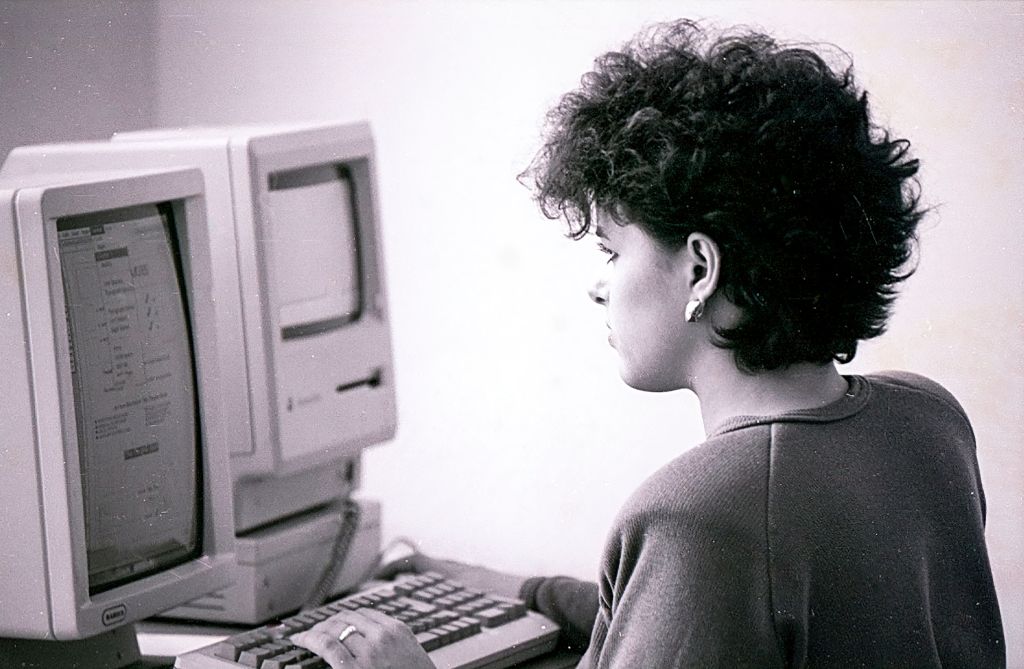
The early internet was treated with scepticism by the average consumer. Many refused to believe that shopping, publishing or conducting business online was necessary or advisable at all. It was considered too risky by many.
Consumer concerns such as security and privacy were valid, but the technology created solutions to minimise the risks, and the resulting growth was unstoppable.
Cryptocurrency

Cryptocurrency has faced huge resistance from consumers and the establishment alike.
Critics have questioned its usefulness and its validity in the established financial landscape.
However, there is no denying that the infrastructure behind cryptocurrencies, namely blockchain technology, is being quietly adopted by major banks, institutions and nation-states as we speak.
Artificial Intelligence

If asked about AI just ten years ago, many consumers would have expressed the opinion that the technology was merely science fiction.
The concept of even a rudimentary intelligent machine was beyond consumer perception, outside of the movie theatre.
Today, the majority of people have the ability to intereact with an artificially intelligent machine on their phone, prompted solely by their voice.
Satellites and Space

Early space programs were described by critics as expensive and of no practical value.
Yet today, satellite technology is the cornerstone of the modern world, providing the infrastructure necessary for mobile phone communications, internet, broadcasting, GPS, weather forecasting and many other technologies we take for granted today.
Should Entrepreneurs Listen to The Crowd?

The honest answer is, it depends.
If your business sector is well established and the tech is not new or groundbreaking, then yes, you should listen to the crowd but with the caveats described in this article.
If your concept is relatively new, involves technology or has not been done before, the answer is probably no. You should not listen to the crowd.
In this case, your goal should be to create something that your potential customer can see, use or touch. Then, once you have a minimal product, you can utilise the ‘wisdom of the crowd’ to iterate.
If your idea is new, it would be wise not to succumb to public opinion, especially if there is a possibility of ‘groupthink’ in the feedback you are receiving.
If you are receiving a lot of negative or positive feedback, do not get overly carried away, especially if those opinions are from users who have not previously paid for your service.
Entrepreneurs should ensure they only put significant weight on the opinions of paid users.
After all, if someone has paid for your service, they are going to have a deeper insight into the reasons as to why they have put cold, hard cash behind your product or service.
Listening to the opinions of armchair critics or unpaid users who may have never used your product may be useful in some respects to assess market sentiment, for example. However, it may not give a true picture of the true potential and scalability of your offering.
Entrepreneurs should not use this controversial viewpoint as an excuse to completely ignore potential consumer opinions or feedback.
Savvy entrepreneurs should always be willing to listen to customer feedback to improve their product or service.
But at the same time, entrepreneurs should be mindful that consumers are not great at identifying useful new products or services that do not exist yet.
Many consumers will initially be very sceptical if your offering is something innovative or new.
Final Thoughts

Entrepreneurs should understand that the “wisdom of the crowd” is valid, but the crowd should not always be listened to in certain circumstances.
If your business is dependent on new, unestablished technology, has a unique business model or is breaking new ground, seeking wisdom from the crowds is likely to be ineffective.
The reasons for this are that crowds are simply not very good at predicting novel innovations or technological advancements.
Entrepreneurs should also be wary of crowd wisdom, especially when there is a danger of ‘groupthink’, where the crowd converges on a decision or opinion due to internal pressures within the group such as a willingness to fit in, or pressure from louder voices within the crowd.
On social media, for example, groupthink can be amplified due to the nature of the likes, clicks and views culture.
Entrepreneurs should also bear in mind that crowd scepticism is real, and many innovations we take for granted today would not have been fully developed if the crowd wisdom of the day had been followed.
Savvy entrepreneurs should be aware of the balance between listening to the crowd and being led by the crowd.
Entrepreneurs should aim to be good leaders and have the vision to be resilient during uncertain times. Part of that vision should be the avoidance of being led by the crowd, especially if your vision is particularly unique, new or involves technology.
This does not mean founders should use this as an excuse not to listen to their customers. Valid information can be gained from a customer, especially if they have financially invested in your product or service.
However, listening to armchair critics or users who have not invested time or finances into your venture may lead to minimal insights beyond limited market sentiment.
True innovation often comes from discovering a path that the crowd had no idea existed.
Good luck!
Why Pop Up World TV?

Creators get paid per Supporter (Subscribers), not on Views.
Only 100 Supporters are required to be eligible for the Revenue Program.
Viewers can select Random Support, so even new Creators can build Supporters over time.
No AI training on your video content.
AI content is ok, as long as it’s original.
No onerous algorithms.
Get Your Free Creator Premium Account by registering at:
Virtual Heaven (Back To Reality) 2017 – (Graham Jules)
Watch The Trailer on Pop Up World TV

Read about the full ‘Alien Agenda’ in an exciting Sci-Fi – Illustrated Screenplay Format Book – Limited edition copies available on Amazon. Virtual Heaven (Back to Reality) – by Graham Jules.
Pop Up World token has a growing ecosystem and is one to watch for the future.
***Disclaimer: This article is not financial advice and is given for informational and entertainment purposes only. Readers should conduct their own research and not invest more than they can afford to lose. Crypto is extremely volatile, and as such can drop in value considerably without notice. Pop Up World has a global presence and is not specifically targeting any jurisdiction with its content. Any crypto references are not intended for UK businesses or consumers. You should always seek legal advice to understand if the use or investment in crypto is allowed in your jurisdiction.
Pop Up World YouTube Reviews:
Review. Malik Atif – Hindi -Urdu
Review. Inside Crypto – Hindi – Urdu
Review. Convincing Crypto – English
The Pop Up World Token is designed specifically for entrepreneurs, to store value and to utilise on our platform Pop Up World. Join the revolution in financial freedom today.
Get the token on Cardano Decentralised Exchanges (DeXs), MuesliSwap, SundeSwap, Wingriders and Minswap. Or click the link here:
Pop Up World token has a growing ecosystem
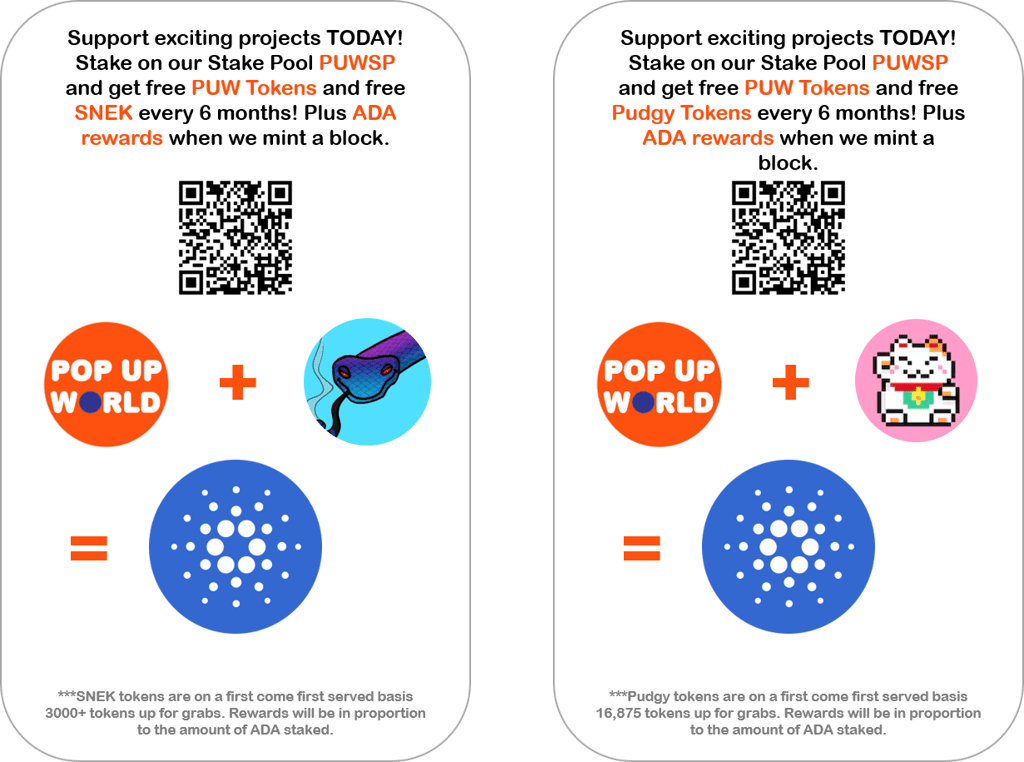
Earn and help support the Pop Up World Blog and entrepreneurs worldwide by joining our Pop Up World Stakepool! Go to https://popupworld.co.uk/popupworldstaking
Thanks!
Want to learn how to stake on Cardano? Read this article:
It starts with an idea. Pop Up World is a platform that helps start-ups and small businesses reach for the stars. No matter what size you are. Use our start-up guide Business Zero to Superhero, Design your Logo. Connect with investors via our Investor Connector. You can start a Website and Domain name. You can Search for and promote your Premises. You can promote your idea for free on our Pop Up World Ads site, you can even form a Limited Company You can also join us on our journey via the Pop Up World Token (PUW).

