
Entrepreneurs need to be ambitious and driven. However, greed is certainly not good when it comes to building your venture.
Of course, most entrepreneurs want to grow quickly, maximise profits and beat the competition; that is expected and normal.
However, excessive greed can have serious impacts on any venture, large or small.
In this article, we look at how the tantalising prospect of making more and the intoxicating nature of greed can potentially end your business.
We also include a fun ‘greed’ game to check if you’re greedy or not!
Here goes…
What is Greed?

In order to have some idea of what normal ambition is, and what is not, we need to know what greed actually is.
Greed can be defined as “the strong impulse to have more of something at any cost“.
For entrepreneurs, that usually means more money, but often power and status are part of the mix too.
What makes greed different from the normal impulse to do well for oneself is that greed is often focused on certain negative traits:
Greed is often focused on personal gain, not giving value or helping others.
Greed is often insatiable, nothing is ever enough.
Greed can often lead to negative and unethical behaviour.
Greed goes beyond normal ambition and can lead to exploitation, dishonesty and imbalances in society.
How Greed Can End Your Business
Trust

One of the key elements in building a successful business is building trust.
All businesses rely on relationships and trust to thrive. When greedy business dealings enter the frame, trust goes out the window, and customers will eventually run for the hills.
The key is not to view your customers as subjects that can be ‘milked’ for more money.
Instead, aim to offer value, and customers will be happy to pay and not feel used or taken advantage of.
Be open and honest about fees, do not hide costs in the small print, and don’t go back on your promises.
Shortcuts

Greed often leads to entrepreneurs taking shortcuts to get quick wins.
Greed encourages shortcuts, compromises values, and prioritises short-term gains over long-term stability.
Those wins are often made by reducing quality, conducting misleading promotions and making extravagant marketing claims.
When the marketing does not meet the customer’s expectations and the reality of the product does not match the promises, the business will inevitably decline.
Often, the decline is irrecoverable, and the business will end.
Financial Mismanagement

Greedy entrepreneurs will often ‘cook the books’ to make their businesses look better than the reality of their circumstances.
They may also be ‘generous’ with financial forecasts and pipelines to paint a compelling picture of the future to investors.
They may overleverage the company or take disproportionate risks to grow the company quickly.
They may expand too quickly before having a solid foundation to support high growth.
Of course, not only is all of the above unethical, but it may also be illegal and, in some circumstances, be considered fraud.
If investors have poured money into the venture, they are likely to pull the plug if any of the above is uncovered.
Culture

When the founders of a company hold greed, revenue and profit ‘at any cost’ at the centre of the decision making process, this can lead to a toxic environment for team members.
Unrealistic targets and high-pressure dynamics can lead to frustrated team members and high staff turnover.
As morale declines and the team shrinks, it may become difficult to attract and retain suitable talent to help grow the business and take it to the next level.
A business cannot scale sustainably without a committed and motivated team, and greed often drives that team away.
Legal

When revenue or profit is the only priority, legality can often be thrown out the window.
Financial statements may be manipulated, regulations may be ignored, and contractual obligations may be disregarded.
While these actions can lead to short-term gains, eventually, the long-term consequences of such behaviour will become glaringly apparent.
Consequences can include lawsuits, fines and even jail time for perpetrators of the greedy behaviour.
All the above will not only harm the individual or individuals concerned, but the reputational damage will often tank the business as well.
Real-World Greedy Examples
1. FTX

FTX, founded by Sam Bankman-Fried, was held up as the saviour of cryptocurrency.
Unfortunately, the company secretly used customer funds to make risky investments.
This misuse of funds not only led to the collapse of FTX but also created a chain reaction that bankrupted companies that had relationships and business dealings with the firm.
The turmoil led to a massive slump in all cryptocurrencies and the crypto market as a whole.
FTX collapsed almost overnight in 2022. In March 2024, Bankman-Fried was sentenced to 25 years in prison for fraud, conspiracy and money laundering.
2. Theranos
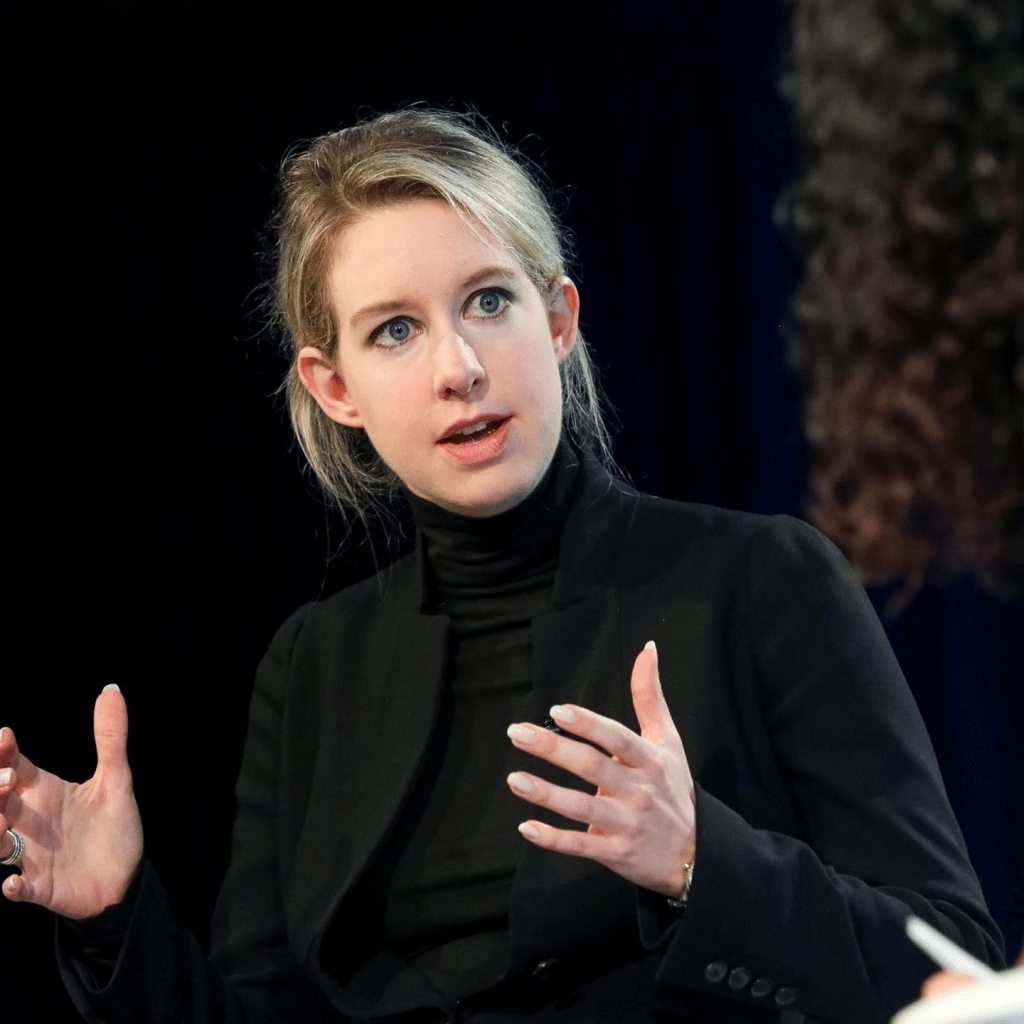
Founded by Elizabeth Holmes, Theranos promised a revolutionary blood-testing technology that could run hundreds of tests from a single drop of blood.
Unfortunately, Holmes had misled investors, and the technology did not work as claimed.
Instead of slowing down, Holmes continued to raise billions of dollars on false claims.
Eventually, investigations exposed the truth, and the company collapsed.
In January 2022, Holmes was convicted and sentenced to over 11 years in prison.
3. Enron
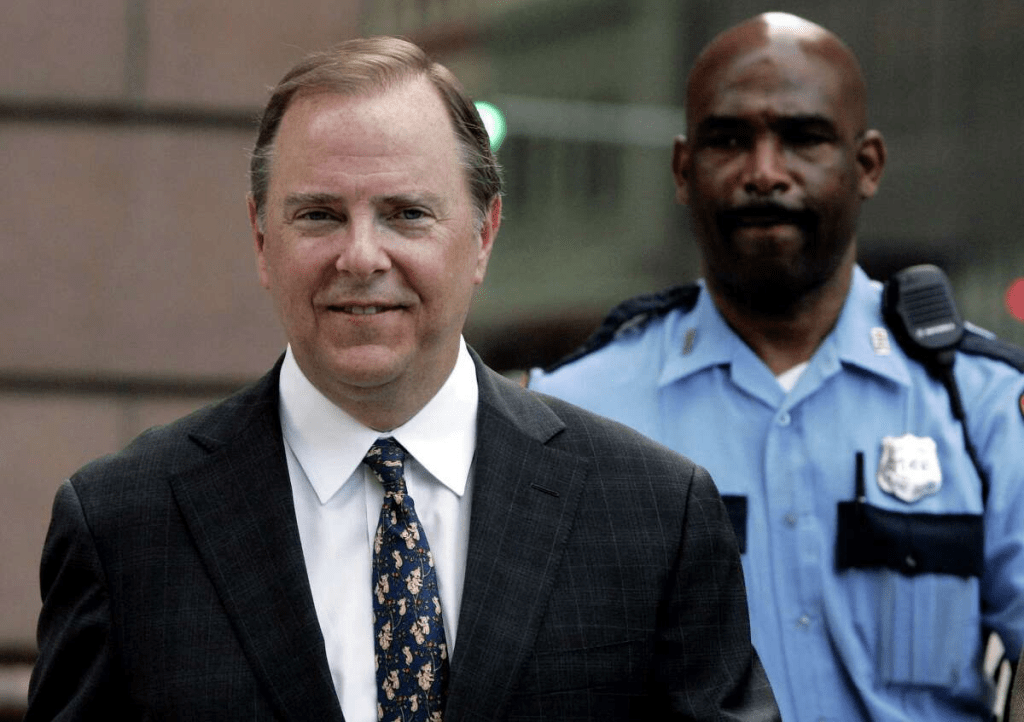
Enron was once one of the largest energy companies in the world.
Unfortunately, its leadership, including Jeffrey Skilling and Kenneth Lay, became obsessed with maintaining high stock prices and appearing profitable at all costs.
They used accounting loopholes and risky accounting practices to hide billions of dollars in failed deals and debt.
The leadership misled Enron’s board of directors and pressured their main accountants and auditors (Arthur Andersen LLC) to ignore the issues.
Enron filed for bankruptcy in December 2001. Many of the leaders were sentenced to prison, including Jeffrey Skilling and Kenneth Lay, who was convicted but died prior to sentencing.
Accountants Arthur Anderson were found guilty of destroying documents relevant to the SEC investigation and lost their licence to operate. They had lost most of their clients anyway, prior to the verdict.
3. WeWork

WeWork, led by Adam Neumann, was a rapidly growing co-working space start-up that had a vision to “elevate the world’s consciousness”.
Unfortunately, behind all the hype and marketing, the business was struggling to justify its huge valuation.
Neumann’s leadership was increasingly controversial. Self-dealing, extravagant spending, and prioritising quick growth over profitability.
The company attempted to accelerate their growth with a high-profile IPO (Initial Public Offering) in 2019.
However, everything unravelled once the reality of the financials became public and investors pulled the plug.
The valuation of $47 billion plummeted to near zero, and the company had to file for bankruptcy to be rescued.
Are You Greedy? – Play Our Greed Game!
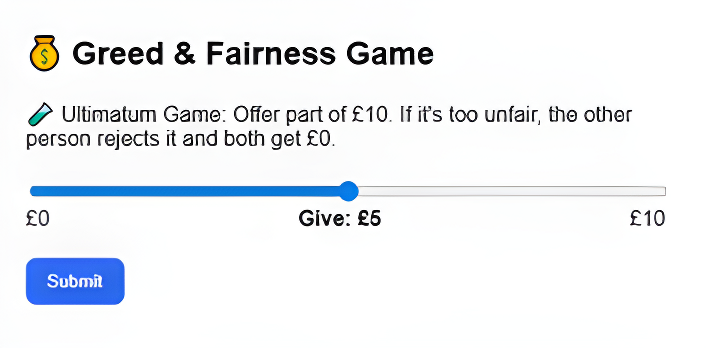
Game 1 – Ultimatum Game
How it works (step-by-step)
- Two people are involved: The Proposer and the Responder
- The proposer is given a sum of money (say £10).
- The proposer must offer a split to the responder (e.g., £7 for themselves, £3 for the responder).
- The responder has two choices:
- Accept – both get the proposed amounts, or Reject – both get nothing
Game 2 – Dictator Game
How it works (step-by-step)
- Two people are involved again – The Dictator and The Recipient
- The Dictator is given money (e.g., £10).
- The Dictator decides how much to give to the recipient.
- The recipient has no choice and must accept whatever is given
The two games highlight the following aspects of greed:
- Ultimatum Game -“Will I act fairly when others can push back?”
- Dictator Game – “Will I act fairly when I have all the power?”
What Can Entrepreneurs Do To Avoid Greed?
The one thing that all entrepreneurs can do to keep greed in check is to be aware.
Understanding that some element of ambition is a natural human trait and being aware can help in keeping the desire to want more at all costs under control.
Having clear values in place, especially during challenging times, can ensure greed does not define the decision-making process.
As an entrepreneur, you should understand that greed is a silent threat that can dismantle your business from the inside out.
Once let loose and the rot becomes visible, it’s often too late, and the ramifications can ruin a business, sometimes overnight.
To avoid the issue, entrepreneurs should set long-term goals rather than aiming for quick wins and shortcuts.
Sustainable businesses require constant reflection, adaptation, and humility. Greed tends to suppress these qualities.
Final Thoughts
Entrepreneurs need to be ambitious and driven, that is without doubt, but greed falls into a different category.
The pursuit of more ‘at all costs’ can lead to problems that can eventually kill your business.
Greed is insidious; in the short term, quick gains are made, but over time and as the rot comes to the surface, the ramifications can be disastrous.
Savvy entrepreneurs should be aware that the main defence against greed is awareness.
Awareness of the issue will help your venture build trust and prevent you from taking shortcuts that could be detrimental in the long run.
Entrepreneurs who protect themselves against greedy decision-making will cultivate loyal teams and avoid contentious legal issues.
Best of all, founders who are aware of the dangers of greed will build a solid reputation that will help build their businesses for the long term, not just for short-term profit.
Good luck!
***Disclaimer: This article is not financial or legal advice and is given for informational and entertainment purposes only. Readers should conduct their own research and not invest more than they can afford to lose. Crypto is extremely volatile, and as such can drop in value considerably without notice. Pop Up World has a global presence and is not specifically targeting any jurisdiction with its content. Any crypto references are not intended for UK businesses or consumers. You should always seek legal advice to understand if the use or investment in crypto is allowed in your jurisdiction.
Pop Up World token has a growing ecosystem.
Pop Up World YouTube Reviews:
Review. Malik Atif – Hindi -Urdu
Review. Inside Crypto – Hindi – Urdu
Review. Convincing Crypto – English
The Pop Up World Token is designed specifically for entrepreneurs, to store value and to utilise on our platform Pop Up World. Join the revolution in financial freedom today.
Get the token on Cardano Decentralised Exchanges (DeXs), MuesliSwap, SundeSwap, Wingriders and Minswap. Or click the link here:
Pop Up World token has a growing ecosystem
Earn and help support the Pop Up World Blog and entrepreneurs worldwide by joining our Pop Up World Stakepool! Go to https://popupworld.co.uk/popupworldstaking
Thanks!
Pop Up World – Merchandise – Click here.

Virtual Heaven (Back To Reality) 2017 – (Graham Jules)

Read about the full ‘Alien Agenda’ in an exciting Sci-Fi – Illustrated Screenplay Format Book – Limited edition copies available on Amazon. Virtual Heaven (Back to Reality) – by Graham Jules.
***Disclaimer: This article is not financial advice and is given for informational and entertainment purposes only. Readers should conduct their own research and not invest more than they can afford to lose. Crypto is extremely volatile, and as such can drop in value considerably without notice. Pop Up World has a global presence and is not specifically targeting any jurisdiction with its content. Any crypto references are not intended for UK businesses or consumers. You should always seek legal advice to understand if the use or investment in crypto is allowed in your jurisdiction.
It starts with an idea. Pop Up World is a platform that helps start-ups and small businesses reach for the stars. No matter what size you are. Use our start-up guide Business Zero to Superhero, Design your Logo. Connect with investors via our Investor Connector. You can start a Website and Domain name. You can Search for and promote your Premises. You can promote your idea for free on our Pop Up World Ads site, you can even form a Limited Company You can also join us on our journey via the Pop Up World Token (PUW).
 Pop Up World Blog