
There’s a lot of talk about equal opportunities and other initiatives but it has always surprised me as to how myopic we are to the realities of the so-called cosmopolitan world we live in.
One day a strange thought crossed my mind about the business and start-up world, “Where is the black Mark Zuckerberg?”, the thought jarred since, as a black entrepreneur myself, I could not easily identify a candidate within the black community. So, I of course did what everyone does I researched, erm, Googled and nothing, zilch. No ‘black Mark Zuckerberg’.
The Mystery

The mystery deepened, as I thought why? Why was there no black person of note to have reached the status of Zuckerberg-like success?
Some may argue that Zuckerberg is not exactly a role model to look up to. His ruthless grappling with the original co-creators of Facebook, the Winklevoss twins is well documented in movies like, “The Social Network”. Zuckerberg eventually settled with the twins for an estimated $65 million.
However, in my opinion, Mark Zuckerberg is simply someone that people love to hate. Love him or loathe him, you have to respect the man for his relentless ambition to connect 3 billion people on the planet.
He’s also managed to do what many founders fail to do and that’s remain in control of his baby, He still remains firmly at the helm of Meta (formally Facebook).
But back to the question, why no black Zuckerberg-like entrepreneur with a billion-dollar business empire?
More Research
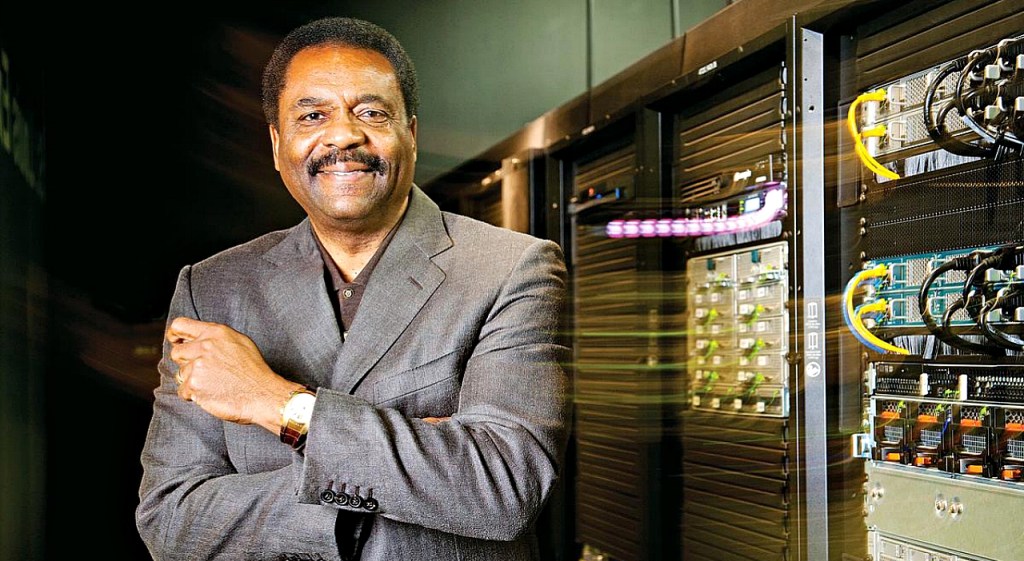
After doing additional research, I did find an American entrepreneur, David Steward from the United States who runs the largest black-owned business in America, World Wide Technology. The business boasts a revenue of $17 billion and employs over 9000 people.
Steward states on the company website. “Talent is equally distributed; opportunity is not,” he adds, “We need to change that by inspiring and igniting untapped potential”. Couldn’t agree more.
Although inspiring, it did seem clear to me that highly successful Steward was not part of the wave of trailblazing Web 2.0 internet entrepreneurs in the aftermath of the Dot.com bubble in the early 2000s. Instead, his company World Wide Technology had launched in the early nineties as an IT reseller.
Why?

So, the problem still persisted in my mind, why no black Mark Zuckerberg? The words of Steward rang in my mind, “untapped talent”.
The reason there is no black equivalent of Zuckerberg, I thought is due to ‘untapped talent’. Namely what Zuckerberg, Google founders, Larry Page and Sergey Brin and even Jeff Bezos of Amazon had in common was that someone believed in them at the very start, even when there was no certainty of any profit. Someone gave them that big break, the investment capital to grow their ideas.
Jeff Bezos launched Amazon from his garage in 1994 with $250,000 in start-up capital from his parents.
In 1998, the Google founders, Larry Page and Sergey Brin raised $100,000 from Sun investor Andy Bechtolsheim.
Zuckerberg, after launching Facebook in 2004, went on to raise $500,001 from angel investor Peter Tiel in the summer and then a further $13 million in venture capital from Accel to roll out Facebook nationwide by 2005.
So, it’s clear investment capital is essential for the growth of the aspiring billionaire entrepreneur and that capital needs to come early if the entrepreneur is to have any chance of success in rapid growth emerging markets.
Harsh reality

With all that in mind, I took to investigating the reality of venture capital for black founders. The figures are unfortunately quite simply, depressing.
Out of all start-ups launched each year less than 1% of those founders of any ethnicity receive funding, so it is hard for all founders of any background. But for black founders specifically, only 1% out of the already minuscule 1% of founders ever receive external funding to realise their dreams. That is a shocking statistic.
Digging deeper, the problem is clear. When looking at the ownership of all venture capital funds we see that in the US a staggering 93% of all venture funds are run by white males, while 6% are run by white females. 99% of all venture funds are run by one segment of society.
Some may argue that if the idea is good enough the “cream will always rise”, but that argument is naïve in my opinion as it does not take into account the highly competitive nature of emerging technologies and the fact that first mover advantage is a real thing.
Reasons

Well, the big question is obvious. Is this discrepancy down to outright racism? The honest answer is probably not, although racism is probably a factor, there does seem to be a basis to argue that unconscious bias in the financial sector and in the start-up community is rife.
Black-owned venture funds struggle to raise money and therefore black founders fail to raise start-up capital and white-owned venture capital will look at the lack of black-owned success stories and be hesitant to invest.
It’s a never-ending cycle of lack of proof of concept. The black founder is always put in the position of having to ‘prove themselves’ as there is not a documented history of success to point to. No matter how great their idea is. Without some kind of intervention, this negative cycle is likely to persist for generations.
Why does it matter?

Some may say, well why does it matter? As long as someone is getting funding and new companies are being born into existence, why does it matter what colour the founder is?
The answer is simple. The unfair distribution of capital has corrosive effects on all our communities. New businesses are often at the centre of those communities. They provide jobs, drive education and through taxation help to build housing and local infrastructure.
The lack of successful black businesses has far-reaching social consequences for everyone in society. Fairer distribution of venture funds will benefit all of society not just black people.
Final thoughts
The issue of lack of venture funds for black-owned businesses is real. But it’s a mistake to label this as just an issue for black people.
As Mark Zuckerberg and his tech counterparts have proved, innovation in tech has the ability to change and improve our lives dramatically. Imagine the world we could be living in if all the ‘untapped talent’ of all colours was tapped into.
The author, Graham Jules LL.B (Hons) is a Business Law graduate and British entrepreneur. His legal experience helped him win the trade mark for his book BUSINESS ZERO TO SUPERHERO against major entertainment company Marvel and DC Comics Entertainment Inc. The company opposed his book title due to their trade mark SUPERHEROES.
Following a three-year battle, Graham’s subsequent victory was reported in the national media and news, including the BBC and Sky. He is also founder of Pop Up World, a super app for small businesses and start-ups.

Review 1. Convincing Crypto – English
Review 2. NFTs Guide – English
Review 3. Inside Crypto – Hindi – Urdu
Review 4. Crypto Universe – English
Review 5. Crypto FLO – English
Review 6. Crypto FLO – Portuguese
Review 7. Malik Atif – Hindi -Urdu
The Pop Up World Token is designed specifically for entrepreneurs, to store value and to utilise on our platform Pop Up World. Join the revolution in financial freedom today.
The Pop Up World token is available on Cardano Decentralised Exchanges (DeXs), MuesliSwap, SundeSwap, Wingriders and Minswap. Or click the link here:
Pop Up World token has a growing ecosystem
Earn and help support the Pop Up World Blog and entrepreneurs worldwide by joining our Pop Up World Stakepool! Go to https://popupworld.co.uk/popupworldstaking
Thanks!
It starts with an idea. Pop Up World is a platform that helps start-ups and small businesses reach for the stars. No matter what size you are. Use our start-up guide Business Zero to Superhero, Design your Logo. Connect with investors via our Investor Connector. You can start a Website and Domain name. You can Search for and promote your Premises. You can promote your idea for free on our Pop Up World Ads site, you can even form a Limited Company You can also join us on our journey via the Pop Up World Token (PUW).
 Pop Up World Blog